
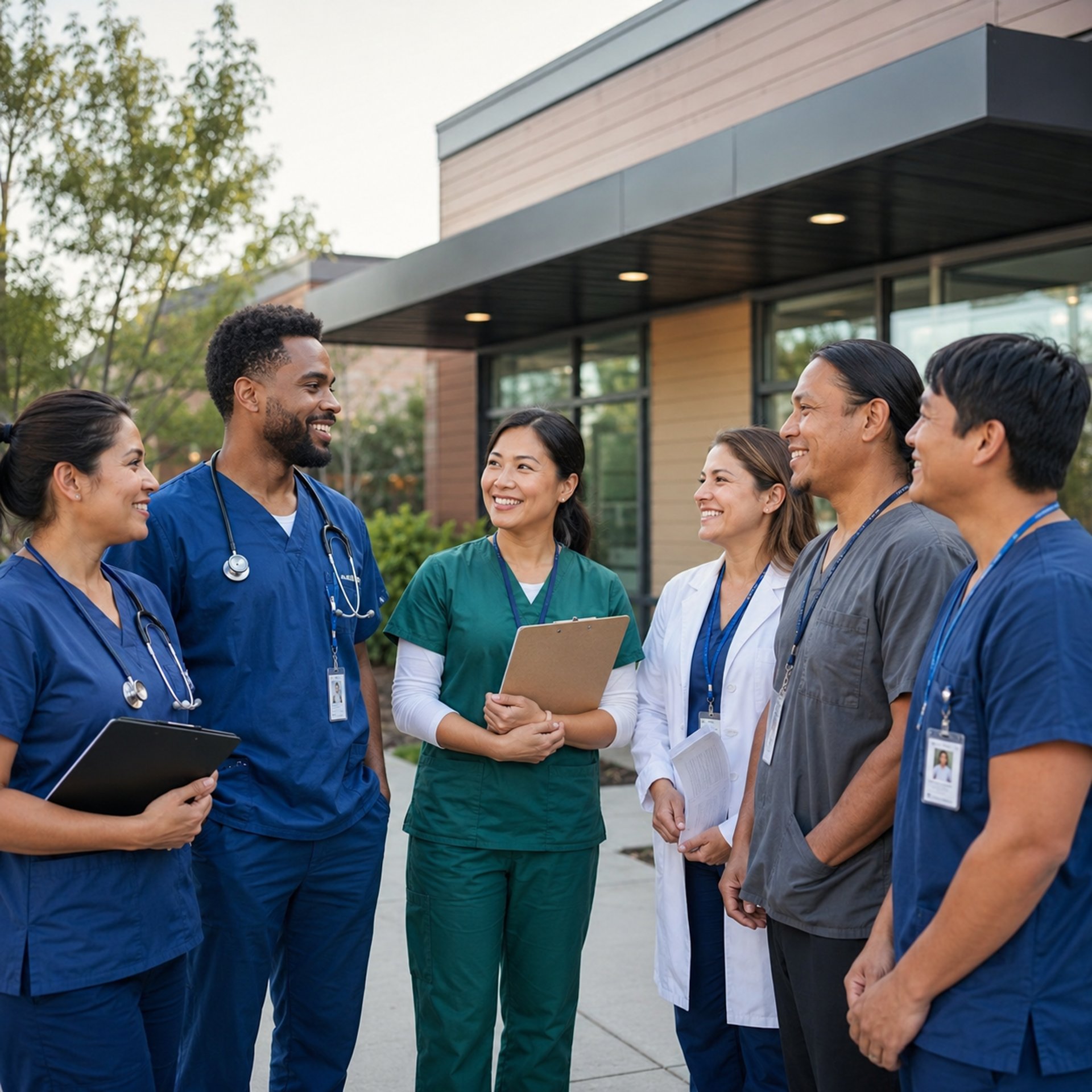
Accessible care starts here
UHPG uses a community-centered approach to identify and support people who face barriers to healthcare, preventive services, health information, and essential resources.
Who We Serve
UHPG serves people who may be identified as underserved, underprivileged, or low-income populations that may benefit from its health and wellness programs. In Colorado, UHPG specifically prioritizes low-income families, immigrants, seniors, people experiencing housing instability, uninsured individuals, and underserved communities.
Low-income families and households — families struggling to afford healthcare, nutritious food, transportation, insurance, or preventive services.


Uninsured and underinsured individuals — people without health coverage or with coverage that does not adequately meet their care needs.
Immigrants, refugees, and newcomers — individuals who may encounter language, cultural, documentation, or health-system-navigation barriers.


Older adults and seniors — especially those living on fixed incomes, experiencing isolation, or managing chronic health conditions.


Individuals experiencing homelessness or housing instability — people whose unstable living conditions create barriers to regular care and wellness.
People with disabilities and chronic conditions — individuals needing accessible services, ongoing care coordination, health education, and support.


Low-income children and youth — young people who need preventive care, nutrition education, mental-health awareness, and healthy-development support.


Single parents and caregivers — households managing financial hardship, child-care responsibilities, and limited time or transportation for healthcare.
Racially, culturally, and linguistically marginalized communities — communities that experience health disparities or limited access to culturally responsive information and care.


Our Approach
In Colorado, UHPG identifies potential participants through a community-centered, equity-focused outreach approach. Our goal is to reach people facing financial, social, cultural, geographic, or insurance-related barriers to preventive care and health information. UHPG publicly prioritizes low-income families, immigrants, seniors, people experiencing housing instability, uninsured individuals, and other underserved communities
Ways How UHPG finds people
UHPG identifies and connects with these populations through:
Community outreach: Health fairs, screenings, wellness campaigns, cultural events, faith-based gatherings, and neighborhood programs.
Partner referrals: Referrals from clinics, hospitals, schools, food pantries, shelters, senior centers, immigrant-serving organizations, and behavioral-health providers.
Resource-navigation encounters: Individuals seeking insurance guidance, prescriptions, food assistance, transportation, housing, or healthcare referrals are often experiencing access barriers.
Community health assessments: Listening sessions, surveys, focus groups, and feedback from residents and community leaders can identify priority health needs.
Trusted messengers: Community health workers, volunteers, faith leaders, cultural organizations, and bilingual advocates can reach people who may not engage with traditional healthcare systems.
Self-referral: Individuals and families can contact UHPG directly for health education, wellness activities, referral support, and resource navigation.

